

產品櫥窗
-
L-Glutamic acid monosodium salt hydrate
|
產品型號:101-6106-04-3 商品規格: |
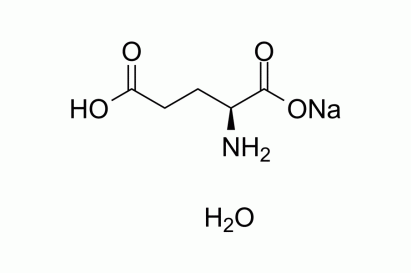 |
L-2-Aminopentanedioic acid, MSG, Sodium L-glutamate
Formular: C5H10NNaO5
MW: 187.13
Description:
A white, crystalline powder or granules, freely soluble in water and practically insoluble in common organic solvents such as ethanol and ether. It is the hydrated form of the sodium salt of L-glutamic acid, a naturally occurring non-essential amino acid. The compound is hygroscopic and typically exists as a monohydrate under standard storage conditions. It is an excitatory amino acid neurotransmitter that acts as an agonist for all subtypes of glutamate receptors (metabolic rhodophylline, NMDA, and AMPA). It has an agonist effect on the release of DA from dopaminergic nerve endings. It acts at ionotropic and?metabotropic glutamate receptors
Applications:
· Widely used as a flavor enhancer in the food industry due to its umami taste, amplifying savory notes in processed foods, snacks, soups, and seasonings.
· Serves as a biochemical reagent and cell culture additive, providing a readily assimilable source of glutamic acid and sodium for metabolic studies and microbial growth media.
· Utilized in pharmaceutical formulations and nutritional supplements as an excipient or active ingredient precursor.
· Can be used in the study of neurological diseases.
MW: 187.13
Description:
A white, crystalline powder or granules, freely soluble in water and practically insoluble in common organic solvents such as ethanol and ether. It is the hydrated form of the sodium salt of L-glutamic acid, a naturally occurring non-essential amino acid. The compound is hygroscopic and typically exists as a monohydrate under standard storage conditions. It is an excitatory amino acid neurotransmitter that acts as an agonist for all subtypes of glutamate receptors (metabolic rhodophylline, NMDA, and AMPA). It has an agonist effect on the release of DA from dopaminergic nerve endings. It acts at ionotropic and?metabotropic glutamate receptors
Applications:
· Widely used as a flavor enhancer in the food industry due to its umami taste, amplifying savory notes in processed foods, snacks, soups, and seasonings.
· Serves as a biochemical reagent and cell culture additive, providing a readily assimilable source of glutamic acid and sodium for metabolic studies and microbial growth media.
· Utilized in pharmaceutical formulations and nutritional supplements as an excipient or active ingredient precursor.
· Can be used in the study of neurological diseases.
Store at Room Temp.