

產品櫥窗
-
Thiamphenicol
|
產品型號:101-15318-45-3 商品規格: |
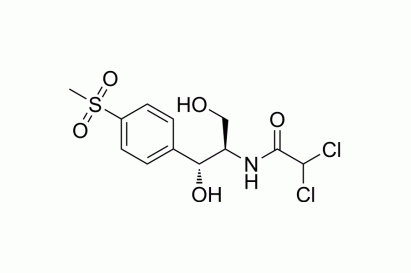 |
Raceophenidol, Thiophenicol, D-threo-2,2-Dichloro-N-(β-hydroxy-α-[hydroxymethyl]-4-[methylsulfonyl] phenethyl)acetamide
Formular: C12H15Cl2NO5S
MW: 356.22
Solubility: 50mg/mL (in DMSO or Ethanol)
Description:
Thiamphenicol, a methyl-sulfonyl derivative of Chloramphenicol, is a broad-spectrum antimicrobial antibiotic. Thiamphenicol acts by binding to the 50S ribosomal subunit, leading to inhibition of protein synthesis and bacteriostatic effect (against Gram-negative, Gram-positive aerobic and anaerobic bacteria).
Applications:
· Thiamphenicol is an antibiotic that has been used to treat chancroid in men and uncomplicated gonorrhea. It is used in studies of bacterial protein synthesis at the level of peptidyl transferase activity associated with the 23S rRNA of the 50S ribosomal subunit.
· It is used to study chloraniphenicol-thiamphenicol-resistance and the use of fluorinated analogs when resistance is encountered.
MW: 356.22
Solubility: 50mg/mL (in DMSO or Ethanol)
Description:
Thiamphenicol, a methyl-sulfonyl derivative of Chloramphenicol, is a broad-spectrum antimicrobial antibiotic. Thiamphenicol acts by binding to the 50S ribosomal subunit, leading to inhibition of protein synthesis and bacteriostatic effect (against Gram-negative, Gram-positive aerobic and anaerobic bacteria).
Applications:
· Thiamphenicol is an antibiotic that has been used to treat chancroid in men and uncomplicated gonorrhea. It is used in studies of bacterial protein synthesis at the level of peptidyl transferase activity associated with the 23S rRNA of the 50S ribosomal subunit.
· It is used to study chloraniphenicol-thiamphenicol-resistance and the use of fluorinated analogs when resistance is encountered.
Store at Room Temp.